Why the checklist already failed
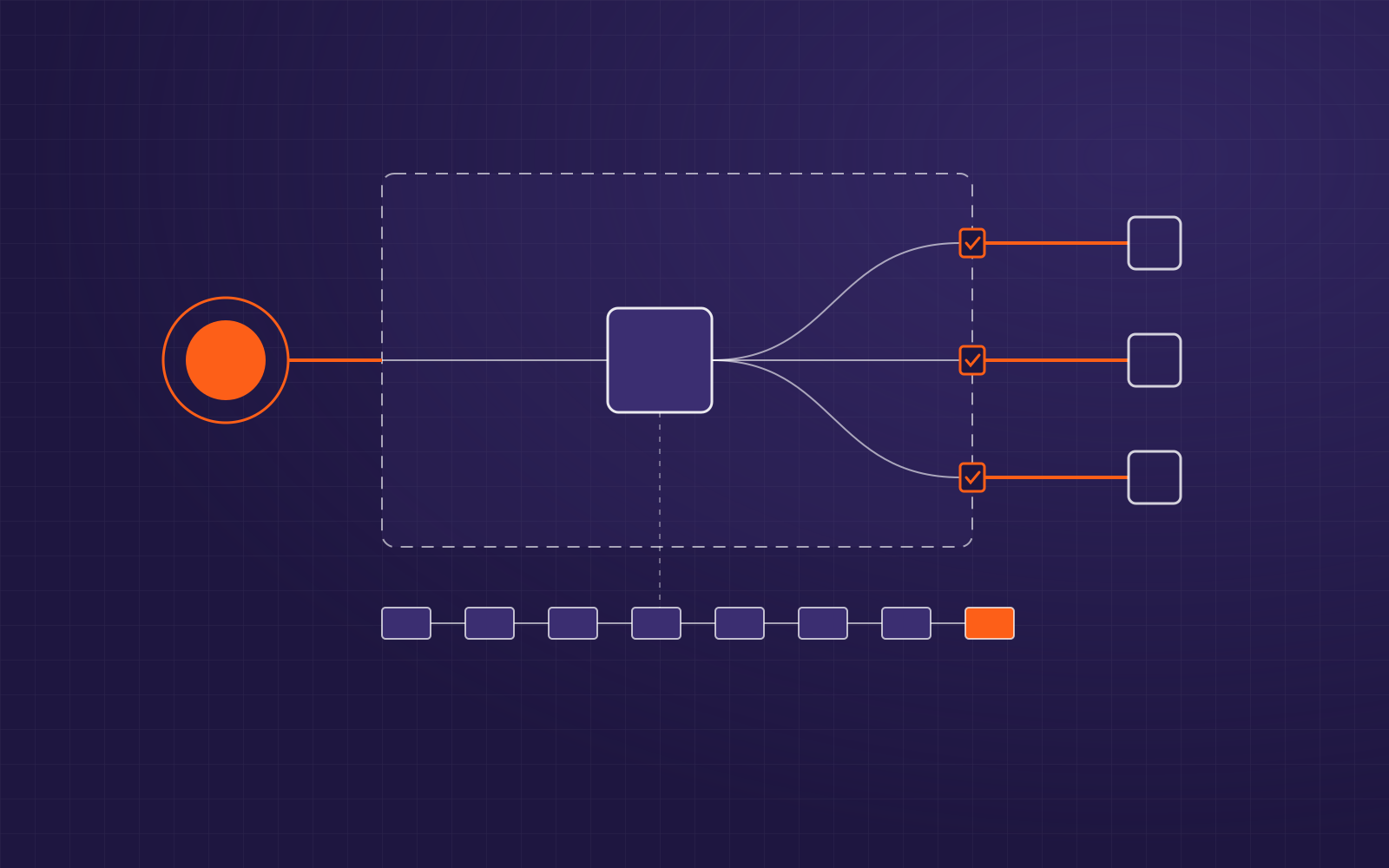
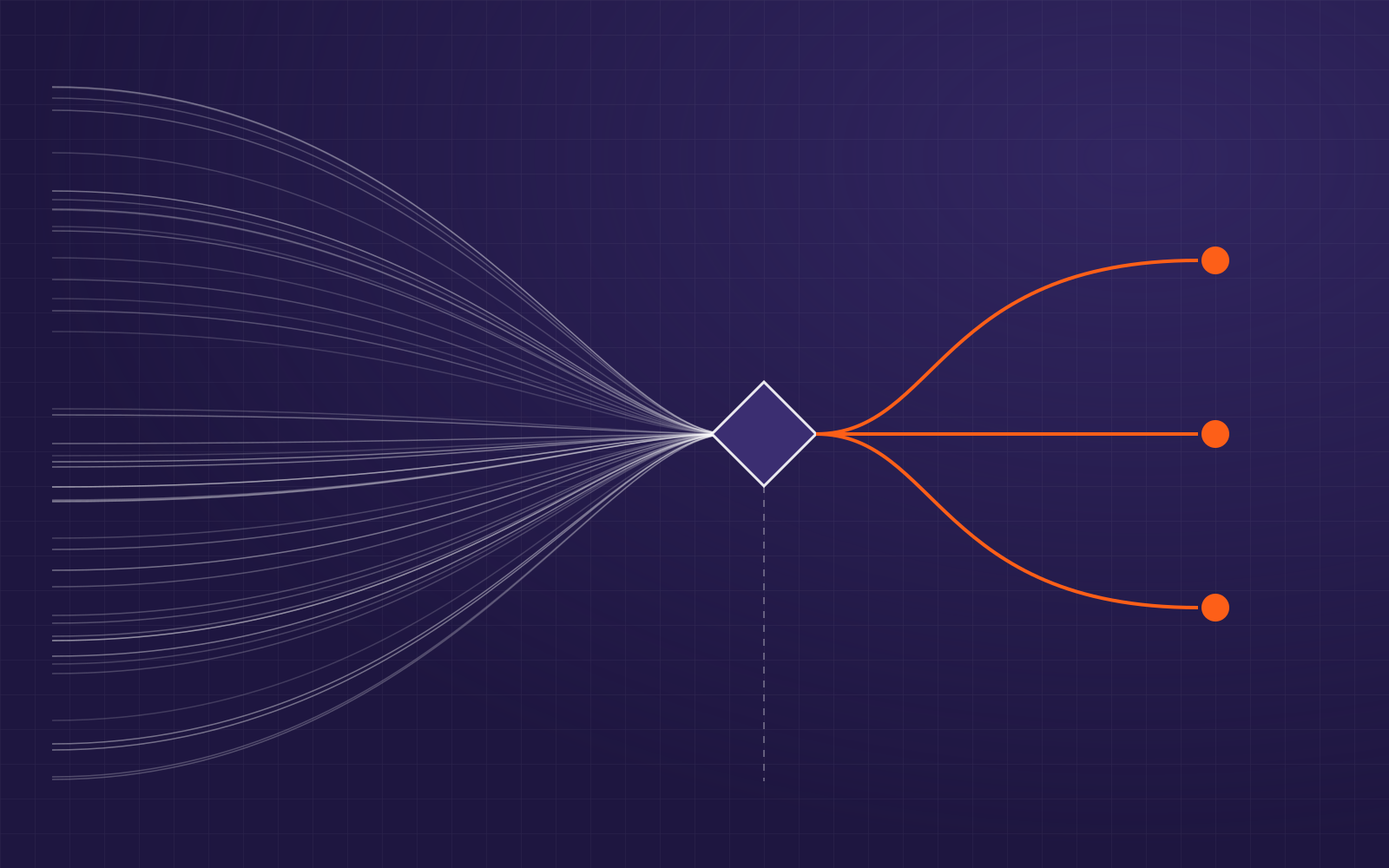
Most organisations still secure AI the way they secure everything else: secure the model, test for vulnerabilities, deploy, then move on to the next project. That approach is already out of date, because AI systems do not behave like the software it was built for. They evolve. They learn. They drift. They get attacked in ways nobody anticipated the week before. Security cannot be a stage in a project plan when the thing being secured keeps changing after the plan ends. It has to become a system that runs for as long as the model is in production.
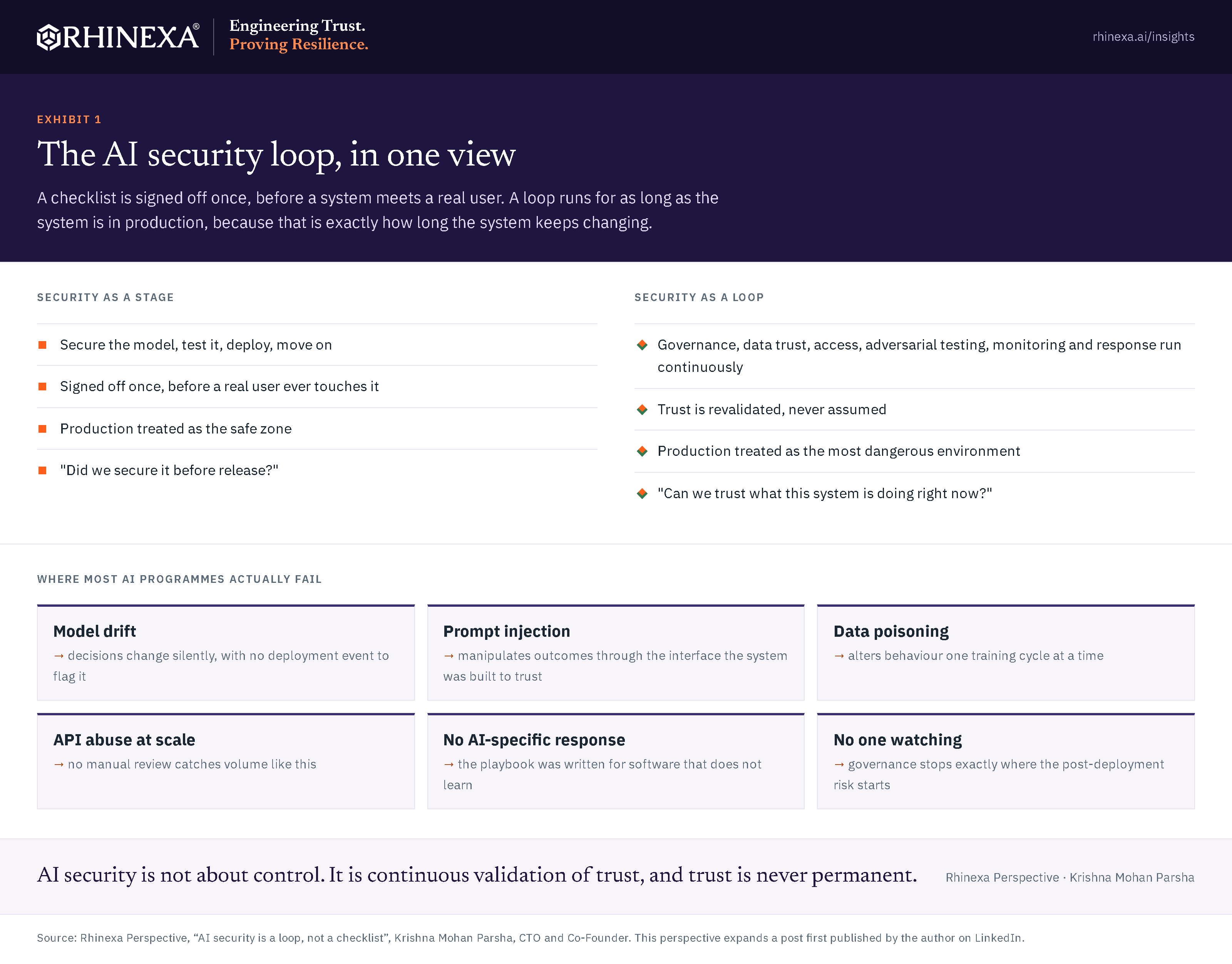
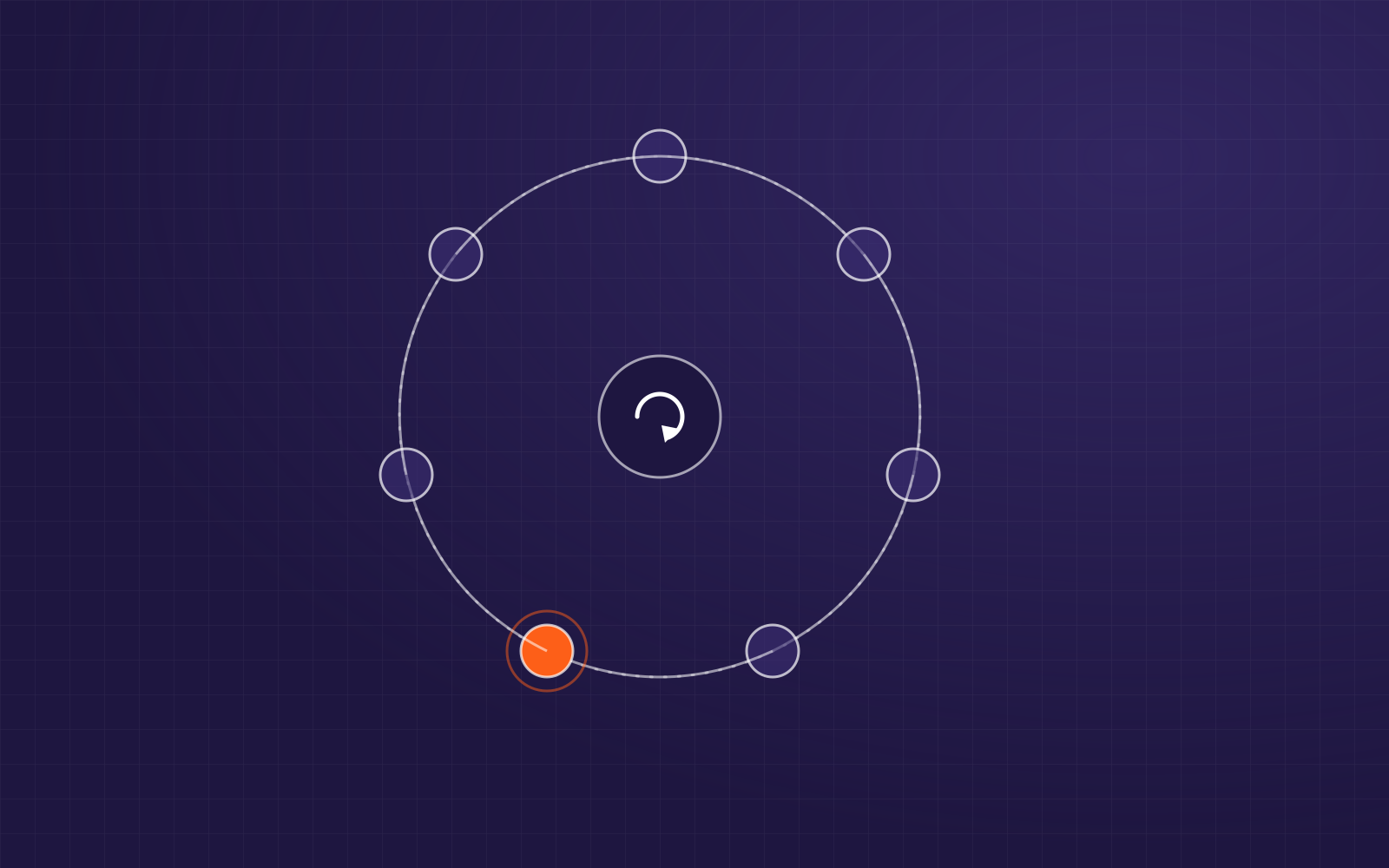
The AI security loop, in one view
A checklist is signed off once, before a system meets a real user. A loop runs for as long as the system is in production, because that is exactly how long the system keeps changing.
- Secure the model, test it, deploy, move on
- Signed off once, before a real user ever touches it
- Production treated as the safe zone
- "Did we secure it before release?"
- Governance, data trust, access, adversarial testing, monitoring and response run continuously
- Trust is revalidated, never assumed
- Production treated as the most dangerous environment
- "Can we trust what this system is doing right now?"
Where most AI programmes actually fail
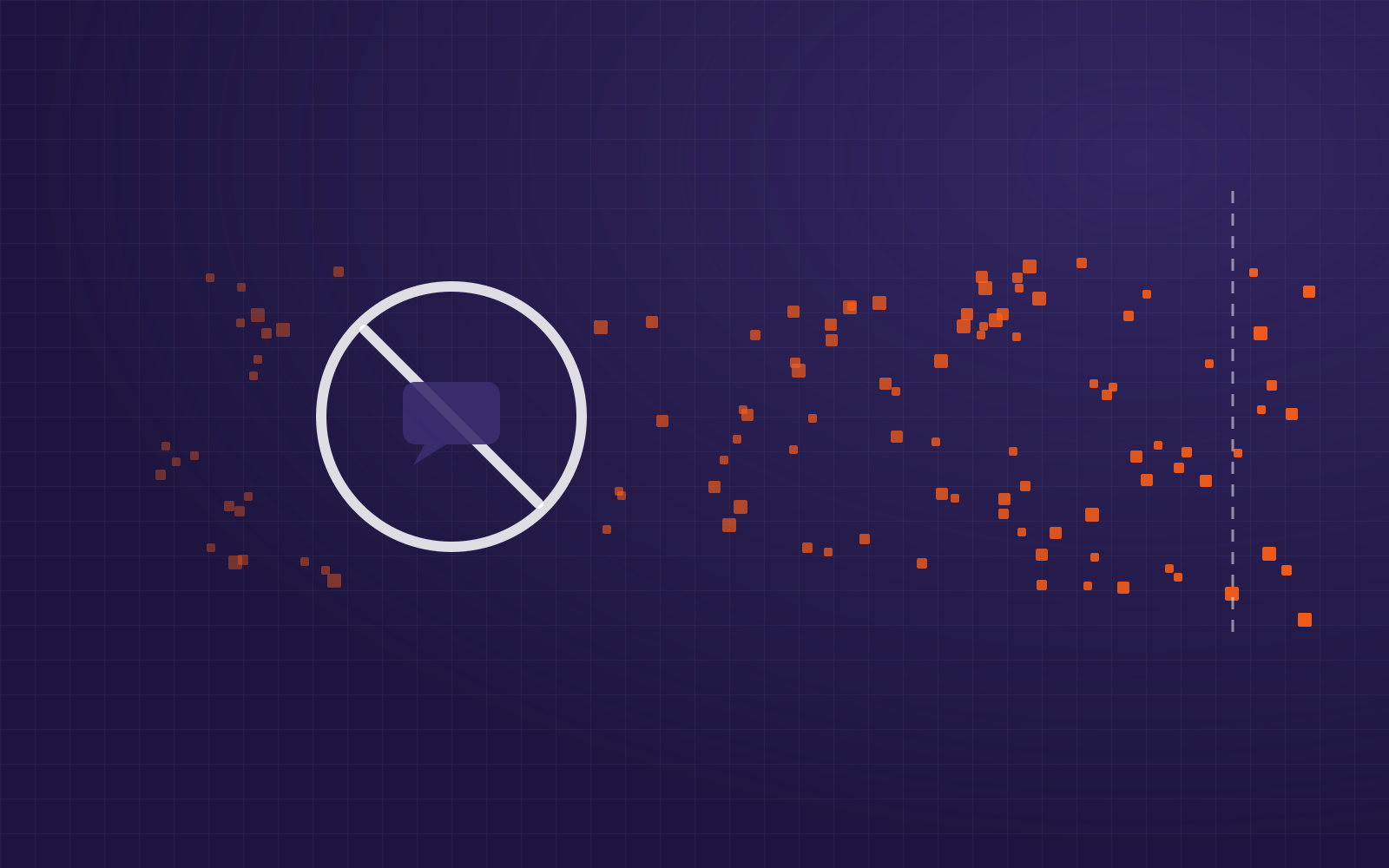
Every AI security programme secures the model before it ships. Very few keep watching once it is live, and that is exactly where the real risk sits. Model drift changes decisions silently, with no deployment event to flag it. Prompt injection manipulates outcomes through the interface the system was built to trust. Data poisoning alters behaviour over time, one training cycle at a time, until the model that shipped clean is no longer the model running in production. API abuse happens at a scale no manual review catches. And most programmes have no AI-specific incident response at all, because the playbook was written for software that does not learn. In AI, production is the most dangerous environment, not the safest one, and most governance stops exactly where that risk starts.
The question that has to change
The shift leaders have to make is in the question itself. The old question is "did we secure it before release?", which is answered once, with a yes or no. The question that actually matters is "can we continuously trust what this system is doing right now?", which has no permanent yes. AI security is not control in the sense of a gate passed through once. It is continuous validation of trust, and trust in an AI system is never permanent. It has to be earned, monitored and revalidated for as long as the system runs, through the same disciplines applied as a loop rather than a pipeline with an end:
GovernanceDefines the boundaries: risk appetite, policy and compliance the system has to operate inside.
Data securityProvenance, lineage and integrity, so the system can be trusted to have learned from what you think it learned from.
Access controlLeast privilege enforced on the model and the agent acting on its behalf, not only on the humans around it.
Adversarial defenceSimulations and red-teaming that test resilience before an attacker does.
MonitoringDetects drift: behaviour that no longer matches expectation, not just uptime.
Incident responseAI-specific playbooks, because a playbook written for a server does not fit a model.
Continuous improvementCloses the loop and feeds every finding back into governance, so the boundary moves with what was learned.
AI security is not about control. It is about continuous validation of trust. And trust, in AI systems, is never permanent.
Where to begin
Do not start by re-securing the model. Start by asking, for one AI system already in production, who would notice if its behaviour changed this week, and how. If the honest answer is nobody, and no alert, the loop does not exist yet, whatever the pre-deployment checklist said. Build the monitoring and the incident response first. The rest of the loop has somewhere to report to once those exist.

Krishna works at the intersection of cyber security, infrastructure, AI and enterprise risk, with a focus on engineering trustworthy and resilient technology foundations.
Follow on LinkedInThis perspective expands a post first published by the author on LinkedIn.