Why the perimeter stopped being the argument
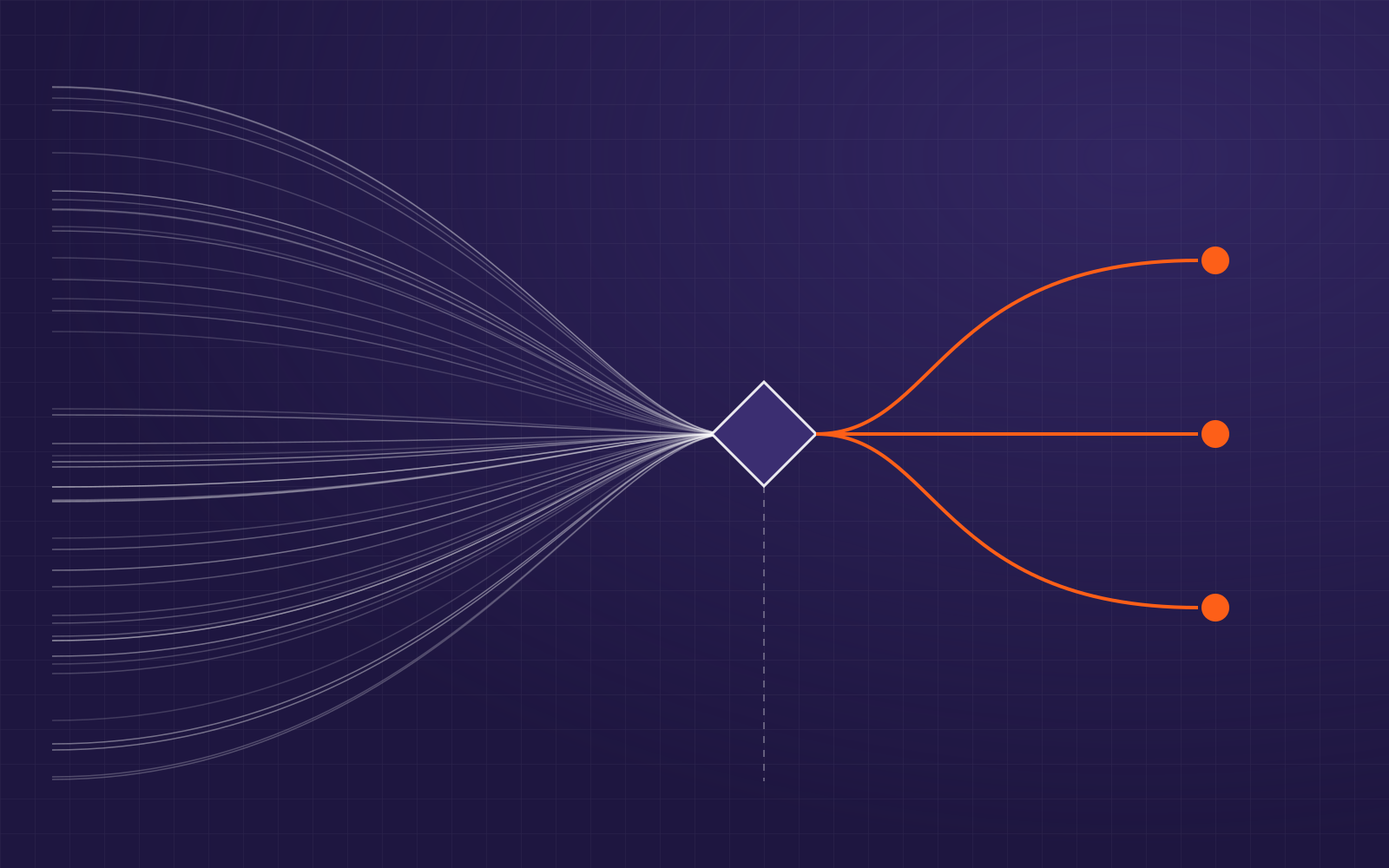
The old model assumed the firewall was the checkpoint and everything behind it was friendly. Traffic moving in and out of the network, north-south, got inspected. Traffic moving between servers, workstations and services inside the perimeter, east-west, was waved through, because the edge firewall was doing the trusting on everyone's behalf.
That assumption is now the attacker's business model. Once a foothold lands, movement between internal systems is what turns a single compromised laptop into a compromised domain. Legacy trust in east-west traffic lets an intruder move from a low-value entry point to the systems that hold the actual target, without much difficulty and often without detection.
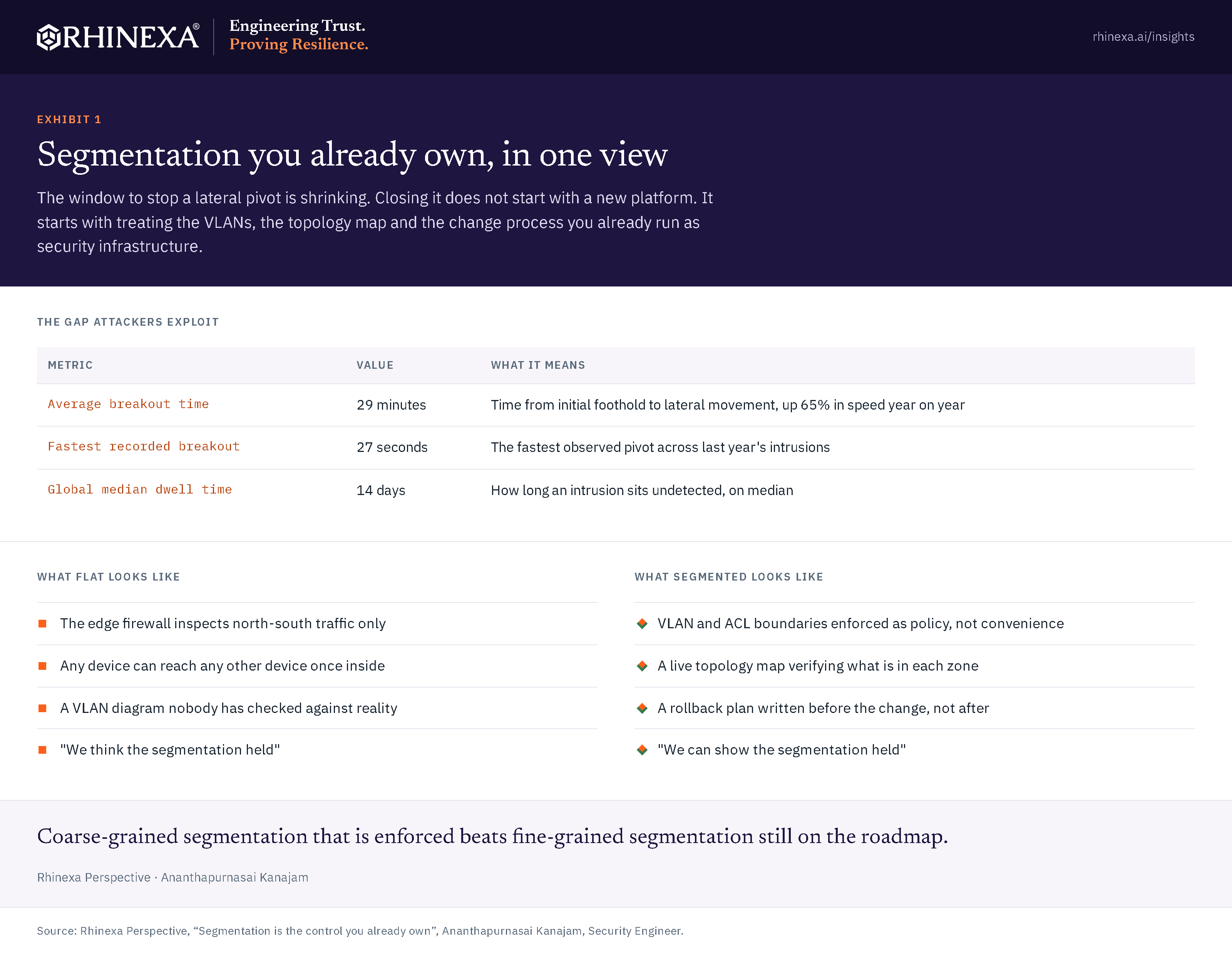
Segmentation you already own, in one view
The window to stop a lateral pivot is shrinking. Closing it does not start with a new platform. It starts with treating the VLANs, the topology map and the change process you already run as security infrastructure.
| Metric | Value | What it means |
|---|---|---|
| Average breakout time | 29 minutes | Time from initial foothold to lateral movement, up 65% in speed year on year |
| Fastest recorded breakout | 27 seconds | The fastest observed pivot across last year's intrusions |
| Global median dwell time | 14 days | How long an intrusion sits undetected, on median |
- The edge firewall inspects north-south traffic only
- Any device can reach any other device once inside
- A VLAN diagram nobody has checked against reality
- "We think the segmentation held"
- VLAN and ACL boundaries enforced as policy, not convenience
- A live topology map verifying what is in each zone
- A rollback plan written before the change, not after
- "We can show the segmentation held"
Detection alone cannot close that gap. Something has to make the internal network expensive to move through before detection catches up, and that something is segmentation, not a faster SOC.
What "the control you already own" means
Most environments do not lack the building blocks. They lack the discipline to use them as a security boundary instead of a broadcast-domain convenience. If a platform vendor's pitch is the first time your organisation has heard the word segmentation, that itself is a signal: the existing controls were never treated as security controls in the first place.
VLANsAlready divide the network into logical zones for performance reasons. The same boundary can carry access policy, not just broadcast-domain hygiene.
ACLs on routers and layer-3 switchesCoarse-grained, but able to enforce that the finance VLAN does not talk to the guest VLAN, without new hardware.
The firewall already in placeCapable of inter-VLAN inspection, not only north-south, once it is placed and routed to see that traffic.
The NMS already runningThe piece most teams under-use for security. It turns a segmentation policy into something you can prove, not just assert.
None of this replaces micro-segmentation for east-west enforcement at the workload level; that discipline gives finer granularity than a VLAN ever can, and the roadmap towards it is worth having. But most breaches do not need workload-level precision to stop them. They need the flat, everything-reaches-everything network to stop being flat, and VLAN-level segmentation, enforced rather than assumed, is the floor that should already be solid before the workload-level ceiling is worth building.
NMS: the visibility layer segmentation depends on
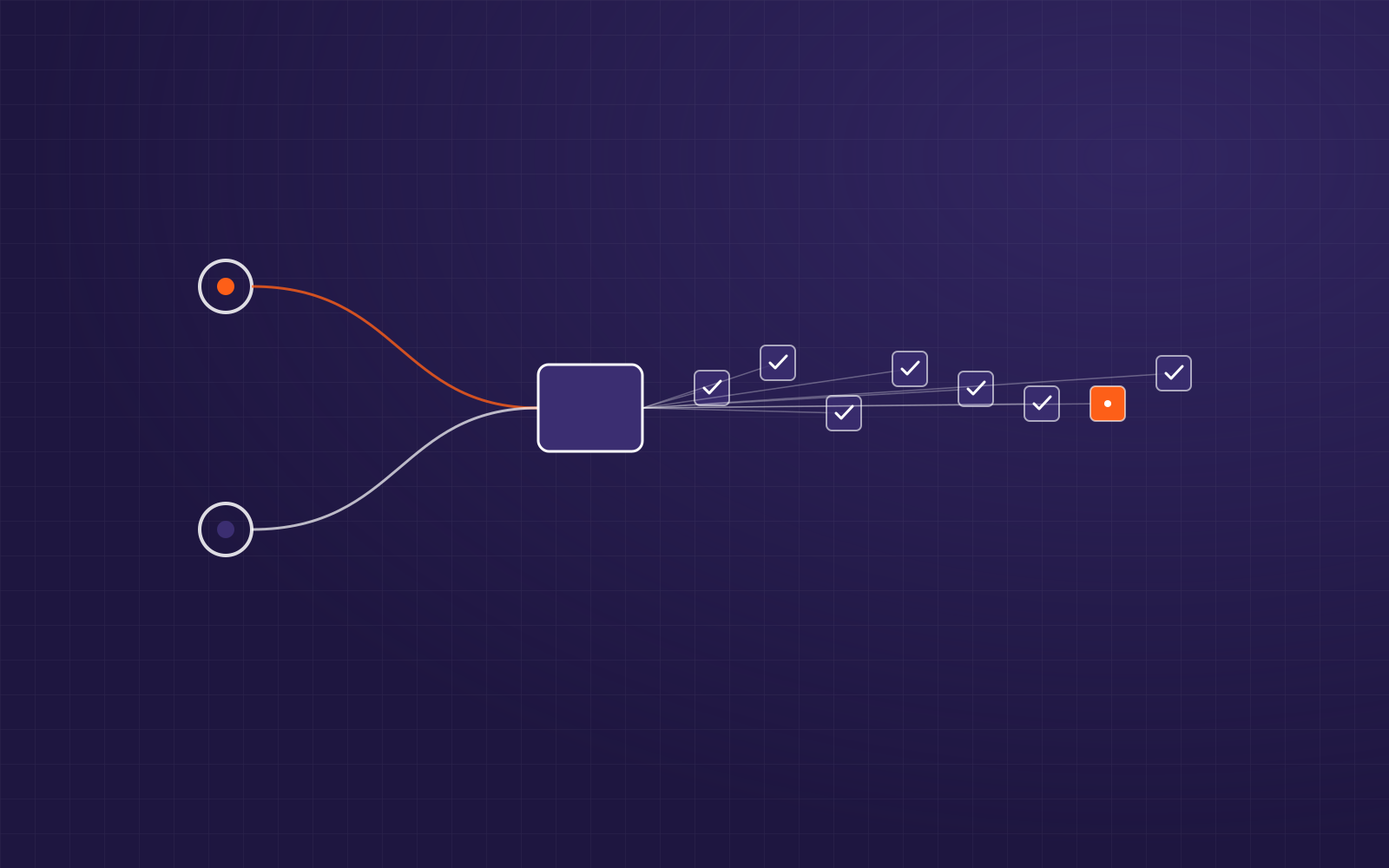
Segmentation policy is only as good as the map it is drawn on. You cannot restrict traffic between zones you cannot enumerate, and you cannot prove a boundary holds if you do not know what is plugged into each VLAN. This is where a network management system stops being a monitoring convenience and becomes a security prerequisite, answering three questions a firewall rule alone cannot.
What is in each zone. Without a topology view, a VLAN assumed to hold only finance workstations might carry a forgotten print server or a vendor's remote-access box bridging it to something it should never touch. Where the boundary actually is. Discovery via LLDP, CDP and routing protocols exposes the Layer 2 and Layer 3 relationships between switches, routers and firewalls, the only reliable way to confirm a trunk port is not quietly carrying a VLAN it should not. What changed, and when. Continuous topology synchronisation keeps the map current as devices are added, removed or reconfigured, which is what turns "we think the segmentation held" into "we can show the segmentation held", a distinction that matters as much to an auditor as to an incident responder tracing a pivot.
This is also the practical answer to "we already have VLANs, we are segmented". VLANs and zones divide a network at Layer 2 or Layer 3, but on their own they say nothing about whether the boundary is intact on any given day. Topology data verifies the boundary. It does not just assume it holds.
VLAN rollback: why teams do not segment more aggressively
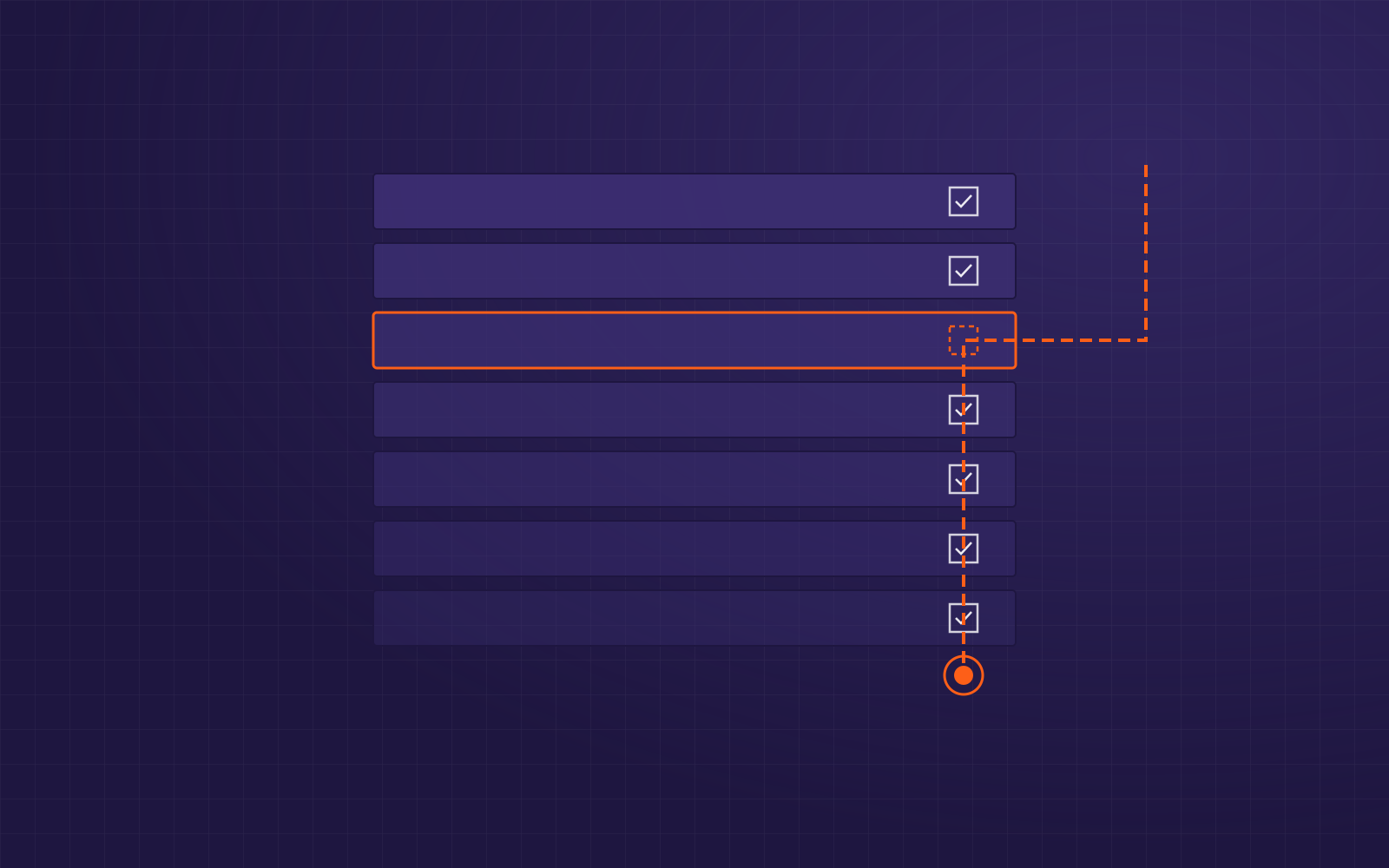
Ask a network engineer why more aggressive segmentation has not happened, and the honest answer is rarely "we did not know it mattered". It is closer to "the last VLAN change took down a business unit for four hours, and nobody wants to own that again". Segmentation work is blocked less by architecture than by the fear of an unrecoverable change, which makes rollback the actual unlock, not a footnote.
A trunk port reconfiguration or a management-VLAN change can isolate several VLANs at once, and unlike most application changes, a bad network change can also take out the access needed to fix it. That is exactly why segmentation gets deferred indefinitely without a rollback path the team actually trusts.
What separates a rollback plan that gets used from one that exists only on paper is specificity. A change is not ready until it can answer every line of this:
- Out-of-band access to the affected switch is confirmed, not assumed, before the change window opens
- The current running configuration is exported and stored somewhere the change itself cannot destroy
- The exact reverse commands are written down, not reconstructed from memory under pressure
- A hard rollback deadline is set: verified by this time, or revert automatically
- Verification is concrete: expected VLAN and DHCP scope on the endpoint, no new spanning-tree events, management access still reachable
- No adjacent firewall or routing change is bundled into the same window unless it shares the rollback plan
"We will figure it out if something breaks" is not a rollback plan. It is a delay tactic dressed up as confidence.
Putting the three pieces together
None of this is new architecture. It is a sequence, repeated every time a segment gets tightened.
Map itPull the current topology from the NMS before touching anything. Confirm what is actually in the VLAN, not what the last diagram says is in it.
Draw the boundaryPrioritise the pivot points fastest to close: the zone holding regulated data, the one with the widest blast radius, the one with a device already flagged as unmanaged.
Write the reverseThe rollback command set is part of the change, not something written after it breaks.
Re-map afterConfirm the topology matches what the change intended. The same view that justified the change is what proves it held.
This loop is deliberately unglamorous. It needs no platform evaluation and no line item in next year's budget. It needs treating the VLANs, the topology map and the change process already in place as security infrastructure, and being honest that "we will roll it back if it breaks" only holds up if the rollback was written down before the change went in.
Where to begin
Pick one zone: the one holding regulated data, or the one with the widest blast radius if it were breached. Pull its current topology before changing anything, and check it against what you assumed was there. Write the reverse commands before the forward ones, and set the deadline before the window opens. Then re-map, and keep the map as the evidence that the boundary held.
Micro-segmentation is the ceiling. VLANs with a topology map and a tested rollback plan are the floor, and most networks have not finished building it.